Can children buy a home in a 55-plus community for their parents?
The sale deed can go in a son's or daughter's name. The age rule is about who sleeps there as a resident. These are two different questions, and mixing them up is the most common mistake families make.
Last verified against government sources on . We re-check this post whenever rules change.
In this guide, you'll learn
- Buying and living are two separate rules. A son, daughter, or NRI child can often buy. Only residents who meet the campus age, typically 55-plus, may live there full time.
- The law defines a senior citizen as 60 and above under the Maintenance and Welfare of Parents and Senior Citizens Act, 2007. A campus age of 50 or 55 is a private community rule written into the project papers, not a government figure.
- NRIs and OCI cardholders can buy residential property in India under FEMA without prior RBI approval. They cannot buy agricultural land. Payment must go through a bank account, not in cash.
- Registering property in your parents' name using funds sent from abroad carries legal risk under the Benami Transactions Act. The safer route is buying in the child's own name and letting the parents live there.
- At Maghilvanam, a Vilva Homes campus near Salem, residents must be 55 and above. Get the occupancy clause, the TNRERA number, and the guest policy in writing before you pay any advance.
A son in Bengaluru wants to buy the home. His parents will live there. It is a common plan, often settled over a family WhatsApp group.
Two different rules sit inside it: one about the sale, the other about occupancy. The sale asks whose name goes on the papers. Occupancy asks who is allowed to live there full time.
A 55-plus community usually allows a child to buy and limits who may reside there. If you mix the two up, you pay an advance for a home the parent cannot live in, or you plan on the child moving in later and find the community does not allow it. Both will cost you: either a forfeited advance or a home your parent cannot enter.
This post gives you the frame, not the fine print. Read the sale deed. Ask the developer in writing, and keep the reply.
If you are still unsure what senior living is, start with what senior living is in Tamil Nadu. For how to evaluate any campus, read what to look for in a senior living community.
Buying and living are different rules
Most 55-plus communities allow a child to be on the sale deed. The reason is practical: the senior parent may not have the salary slips or pension income that banks require to sanction a home loan, and the child often does. The developer allows a younger buyer; what they protect is the community character, so only qualifying seniors live there full time.
India’s Ministry of Housing and Urban Affairs published Model Guidelines for Retirement Homes in 2019. Those guidelines say family members may purchase a unit for their parents, but the unit must be occupied by a senior citizen. That guideline is advisory, not a binding central law. But most developers follow this pattern anyway, because it protects the community character their buyers are paying for.
Tamil Nadu has no separate state policy on senior living. TNRERA, the Tamil Nadu Real Estate Regulatory Authority that registers all real estate projects and protects buyers, registers senior living campuses as standard residential building projects. So the specific occupancy rules for any Tamil Nadu campus come from the sale agreement and the community’s own bylaws, not from a government age mandate.
The occupancy clause is in the papers, not the brochure. A developer may tell you verbally that children can buy. That is common and probably true. Confirm it in the agreement before you pay.
What “55-plus” means: law versus community rule
The Maintenance and Welfare of Parents and Senior Citizens Act, 2007, defines a senior citizen as any Indian aged 60 years or above. That is the only statutory age for “senior citizen” in central law.
Fifty-five-plus and 50-plus are community gates. Individual developers write them into the project rules. There is no government mandate that says a senior living campus must use 55. A developer chose that number because it suits the product: people who retire at 55 or 58 and want a peer community, not a rest home.
Why does this matter? Because the number on the brochure and the number in the law may be different, and only the campus rule decides whether your parent can live there.
A 57-year-old fits a 55-plus campus but is not yet a “senior citizen” under the 2007 Act. A 53-year-old fits a 50-plus Coimbatore campus but not a 55-plus Salem one. Neither is a problem in itself, as long as you check the campus rule before planning a visit.
Families sometimes assume any campus that markets itself as “senior living” will accept any parent of retirement age. They visit, they like it, then they find the campus requires 55 and their parent is 52. Ask the minimum age before you plan a visit.
If you are buying from abroad
Under FEMA (the Foreign Exchange Management Act, 1999), the Indian law that governs cross-border money movements, NRIs (Non-Resident Indians) and OCI (Overseas Citizen of India) cardholders can purchase residential property in India without prior Reserve Bank of India approval. A flat or villa in a 55-plus gated community counts as residential property.
What is barred for NRIs and OCI cardholders is agricultural land, plantation property, and farmhouses. A senior living community built as a residential project is not in those categories.
NRIs and OCIs can hold three types of Indian bank accounts. Payment for property must go through one of them, not in cash:
The campus occupancy rule still applies regardless of FEMA. An NRI who is 38 years old cannot live in a 55-plus community because FEMA permits the purchase. Their parent occupies; they hold the title.
If you hold an old Person of Indian Origin (PIO) card that has not been converted to an OCI card, do that before starting any property transaction in India. PIO cards were a precursor to the current OCI card system. They expired as valid identification documents after 31 December 2025.
The step-by-step purchase process for NRIs (which accounts to open, whether to use a Power of Attorney, tax implications when you sell) is in the NRI buying guide. This post does not walk that process. The only extra question for a senior living purchase is occupancy.
Whose name should go on the deed
A common question: can the NRI child send money to India and have the property registered only in the parents’ name? This carries real legal risk.
The Benami Transactions (Prohibition) Act, 2016, covers exactly this situation. In simple terms: if you send money from abroad and put the flat in your parent’s name while your name is not on the deed at all, the law may treat it as a benami (literally, “without a name”) purchase. Penalties can include the government seizing the property and criminal charges. It is not a theoretical concern.
Gifts between close relatives, including a parent and child, are tax-exempt under the Income Tax Act. But a property purchase funded by an NRI and registered only in the parents’ name is a different legal matter from a gift. The two are often confused.
Three structures come up most often:
The NRI buys in their own name and the parents live there as residents. The campus age rule applies to whoever lives there, not to whoever holds the title. This avoids benami risk entirely.
Joint ownership is another option: both names appear on the sale deed, with the parent contributing something to the purchase, even a modest amount. This works when the parent wants to be on the title and gives the arrangement a cleaner footing under the Benami Act.
A third route is for the NRI to remit money to the parents as a gift, and the parents buy in their own names using those funds. Gifts from child to parent are tax-exempt. The parents are then the buyers and the owners, with the NRI’s name not on the deed at all.
Each has different consequences for estate planning, home loans, and a future sale. Do not choose based on this post. Get a chartered accountant or lawyer with NRI property experience to advise you before signing anything.
Guests, family visits, and the pool
Children will visit. Grandchildren will visit.
Most senior living communities welcome that, and the better ones are set up for it: guest rooms in the clubhouse, a pool, common areas where families can spend a day together. But there is a difference between visiting and moving in permanently.
The occupancy agreement spells out who counts as a resident and who is a guest. Guest rules vary across campuses:
- How many nights per year can a child stay?
- Are there dedicated guest rooms?
- Is there a per-night guest charge?
- Can a younger spouse of a 55-plus resident live there permanently?
The last question matters for many couples. A husband who is 62 and a wife who is 51 may find the wife does not meet the campus age rule. Whether a younger spouse may live there as a permanent co-resident is a project-specific rule, not a universal one. Some campuses allow it; some do not. Ask.
Maghilvanam, as the Salem example
Maghilvanam is a Vilva Homes campus at Vinayagam Patty, in the Yercaud foothills, for residents aged 55 and above. The villas are occupied and families are already living there. Kaveri Block, the apartment building, adds 30 two-bedroom flats. The campus has three vegetarian meals a day, a temple on site, 24-hour nursing, an ambulance on standby, and Sharon Cancer Centre and General Hospital adjacent.
TNRERA/7/REGLO/0764/2025 (layout) and TNRERA/7/BLG/0363/2025 (Kaveri Block). Verify both yourself on rera.tn.gov.in before paying.
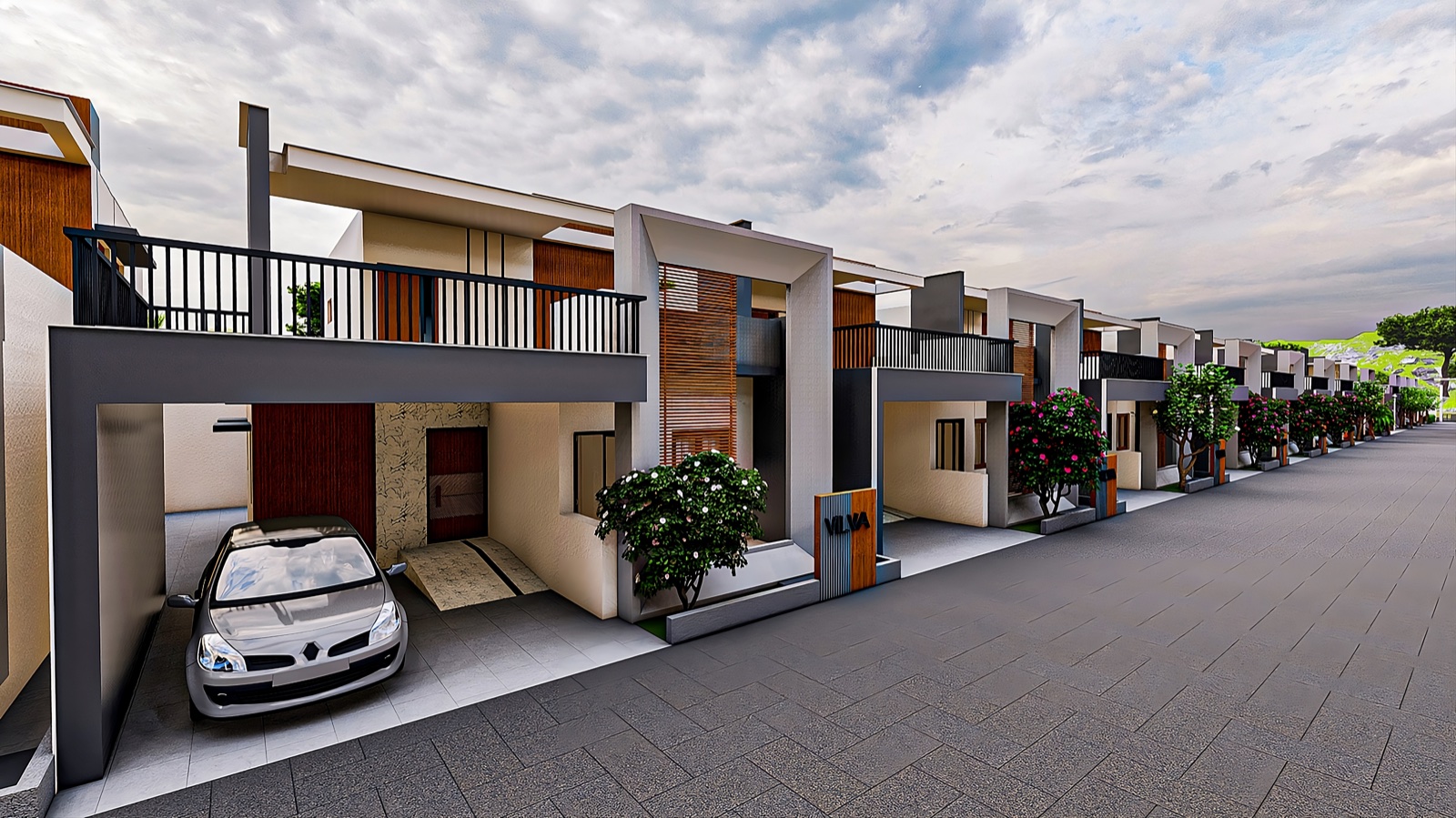



Ask Vilva Homes, in writing, before you pay any advance: Can a child buy? Can an NRI buy? Who may live there as a full-time resident? Can a younger spouse stay permanently? What does the monthly meals and care package include? What is the guest stay policy?
No prices on this website. Call us or send a WhatsApp.
Project page: Maghilvanam.
Six things to confirm before paying
A 55-plus home is still a home. The title and the occupancy both have to work, or the plan falls apart.
Chola Builders has been in Salem since 1994. For Salem’s senior living options, call us or send a WhatsApp.
If you are still weighing Salem against Chennai or Coimbatore for your parents, read retiring in Salem, Chennai, or Coimbatore. And if you have not yet decided what to look for on a campus visit, what to look for in a senior living community covers that.