What Senior Living Is (and Is Not) in Tamil Nadu
When a Tamil Nadu family says senior living, they often mean four different things. This guide separates a home you buy from a care bed, an old-age home, and the family house, so you can search with the right picture in mind.
Last verified against government sources on . We re-check this post whenever rules change.
In this guide, you'll learn
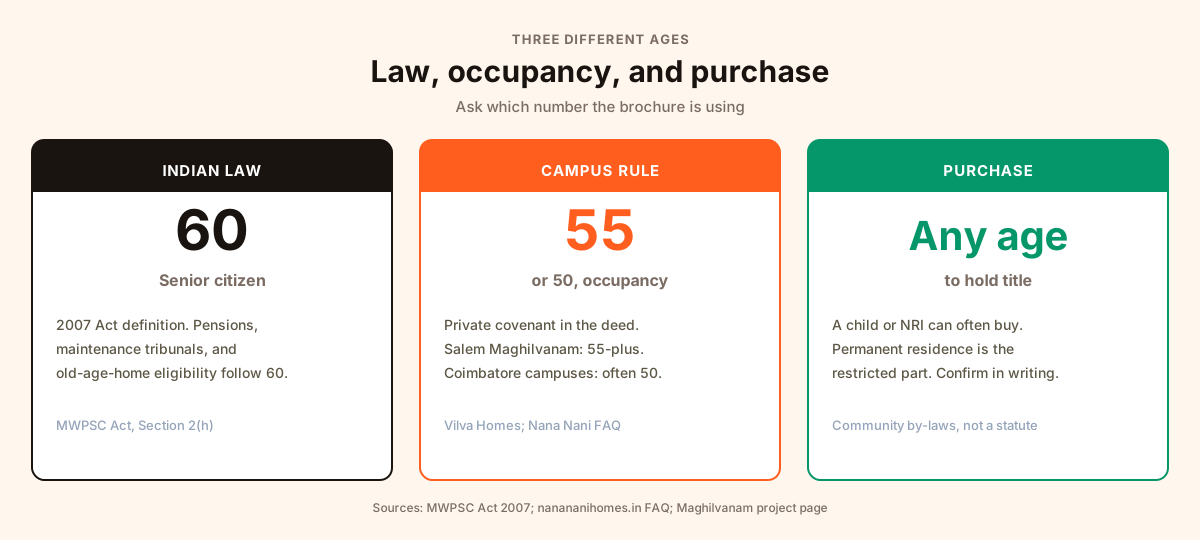
- In Indian law a senior citizen is a person aged 60 or above. A 50-plus or 55-plus gate on a campus is a community rule, not a government age.
- Organised senior living in India is mostly independent living: a home you buy or rent in an age-restricted community, with shared meals, security, and neighbours in the same stage of life. JLL and ASLI counted 22,157 specialised units as of June 2025. Independent living was about 85 percent of stock in their 2024 report.
- Assisted living is a care service with help for daily tasks. An old-age home, in the 2007 Act, is a welfare institution for senior citizens who cannot maintain themselves. Neither is the same as buying a villa or flat in a 55-plus gated community.
- Tamil Nadu is ageing faster than India as a whole. Official projections used in the UNFPA India Ageing Report 2023 put the state's 60-plus share at 13.7 percent in 2021 and 20.8 percent by 2036. Southern India holds about 60 percent of India's organised senior-living market.
- Most Tamil Nadu elders still live in a family house. A 55-plus community is one option among several, not a replacement for every family.
- In Salem, Maghilvanam is a Vilva Homes 55-plus community in the Yercaud foothills. It is an independent-living campus, not a nursing home.
When a Tamil Nadu family starts looking for senior living, they are rarely looking for one thing. A son in Singapore means a campus for his parents. A daughter in Coimbatore means an old-age home she saw on Google. A couple in Salem means a quieter house with a lift and someone at the gate. All three searches return a jumble of listings.
The words have not caught up with the products. This post separates them, with the figures that are actually published, so you can tell a home you buy from a care bed, and both of those from the family house you already have.
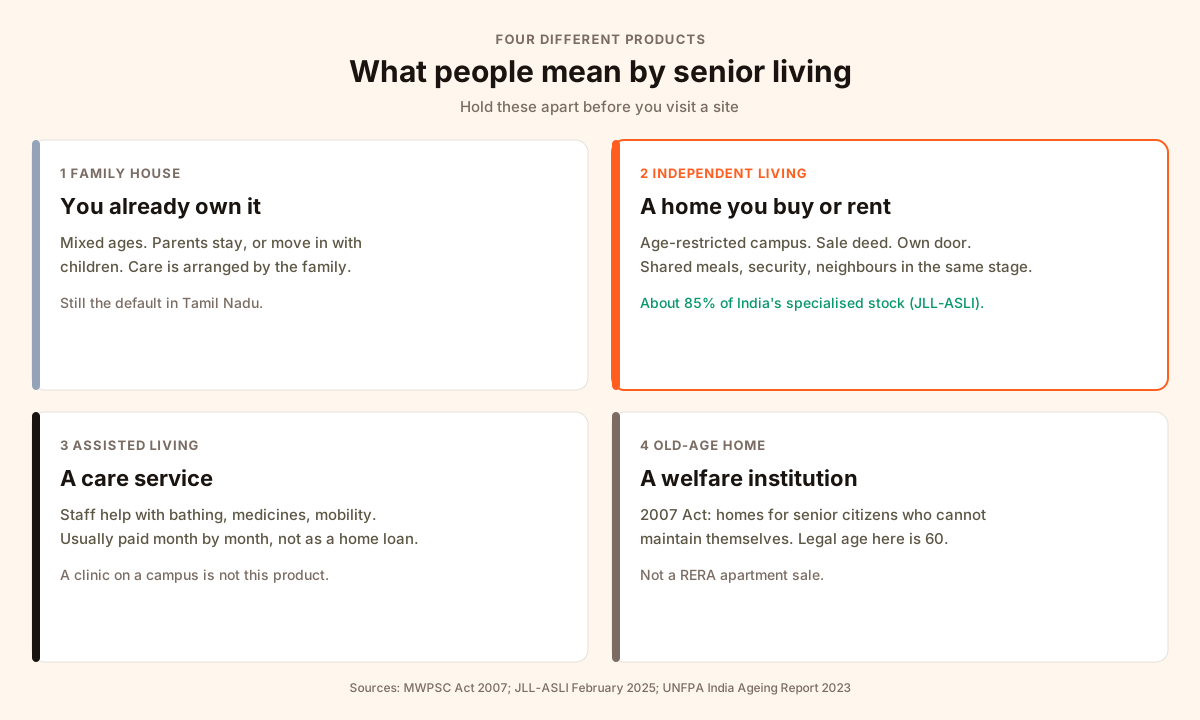
Four Different Things People Mean
Hold these four apart. Almost every confused site visit starts by mixing two of them.
The family house. Still the default. Parents stay in the home they built, or they move in with a son or daughter. The UNFPA India Ageing Report 2023 still argues for supporting ageing at home where it is possible, with day care and short-stay help around it. Most Tamil Nadu elders live this way.
Independent living. A villa or flat you buy (sometimes rent) inside a gated community that only older residents may occupy. You keep a front door, a kitchen, and a sale deed. Meals, security, a clinic, or a temple may sit on the same campus. This is what builders mean by senior living.
Assisted living. A care home. Staff help with bathing, medicines, walking, or memory. You are buying a service, usually month by month, not a conventional apartment.
An old-age home. In Indian law this is a welfare idea, not a real-estate product. The 2007 Act lets a state government set up homes for senior citizens who cannot maintain themselves. Tamil Nadu has also issued minimum standards for such homes. Charity and NGO homes sit in this bucket in the public mind, even when the building is privately run.
Independent Living Is a Home You Buy
This is the product Tamil Nadu buyers now meet on property portals.
You purchase a villa or an apartment. Title works like any other residential sale: a deed, a survey number or an undivided share of land, stamp duty, registration. If the project is large enough, it should appear on TNRERA. You can sell later. Children can inherit.
What changes is the neighbourhood rule. Permanent residents must be over a stated age. The campus is planned for that stage of life: fewer stairs, a dining hall, a place to walk, someone at the gate at 11 pm. JLL and the Association of Senior Living India, in their February 2025 note, put independent living at about 85 percent of India’s specialised senior-living inventory. The rest of the organised stock is assisted living, memory care, and continuing-care campuses.
Coimbatore has had large 50-plus gated campuses since 2010. Ananya’s Nana Nani Homes, by Ananya Shelters, is the one most families in western Tamil Nadu have heard of: villas and apartments, vegetarian dining, a clinic on campus, and a rule that a younger person may buy while only a resident aged 50 or above may live there. Chennai’s organised stock is a mix of similar ownership communities and separate assisted-living operators. Salem’s dedicated 55-plus campus is Maghilvanam, a Vilva Homes project in the Yercaud foothills.
None of these is a hospital. A clinic or an ambulance on site is a campus service. If a resident later needs daily nursing, that is a different conversation, and sometimes a different building.
Assisted Living Is a Care Service
Assisted living exists for people who cannot safely manage a full day alone, but who do not need a hospital bed. Help with bathing, medicines, meals, and mobility is the product.
Indian research on long-term care homes (including a 2021 review in the Indian Journal of Psychological Medicine) treats retirement communities and care homes as different categories. Builders sell the first. Operators staff the second.
Chennai has several assisted-living homes. They are easy to confuse with senior living in a Google result because both use the words senior, care, and community. The billing is the giveaway. A monthly care fee for a room is not a home loan on a 2 BHK.
A 55-plus campus with a nurse on call is still independent living until care, not housing, is what you are paying for.
Old-Age Homes Are a Welfare Category
The Maintenance and Welfare of Parents and Senior Citizens Act, 2007, is the statute families are pointed to when they search for rights, maintenance, and old-age homes.
Two facts from that Act matter here.
First, a senior citizen is a citizen of India who has turned 60. That is the legal age. It is not 50 and it is not 55.
Second, Section 19 lets a state government establish old-age homes for indigent senior citizens, beginning with at least one in each district, with a minimum of 150 residents, and with standards for medical care and recreation. Indigent, in the Act, means a senior citizen who does not have sufficient means to maintain himself or herself.
UNFPA’s 2017 ageing report noted that Tamil Nadu issued a Gazette notification in February 2016 fixing minimum standards for old-age homes. The 2023 report still asked governments to bring all old-age homes under a clear regulatory net.
That legal category is why a search for “retirement home Salem” still returns charity homes and lodging listings alongside a 55-plus gated community. They are not substitutes. One is shelter and care for people who cannot maintain themselves. The other is a house you purchase.
The same Act also places a maintenance duty on children. Moving to a campus does not cancel that duty, and staying in the family house does not remove it either. This post is not legal advice. It only flags that the statute is about maintenance and welfare, not about which villa to buy.
The Family House Is Still the Default
Most readers of this page are not choosing between four campuses. They are choosing whether parents stay in the house in Hasthampatti, move in with a child, or look at a community at all.
That choice is not a ranking. A joint family villa with a ground-floor room, a lift in a Fairlands apartment, and a 55-plus campus can all be the kind option for different families. Our guide on choosing a home for a joint family covers stairs, bathroom floors, and lighting in the house you already have. This post is for the moment the family starts typing “senior living” into Google.
UNFPA still prefers supporting ageing at home where it works, and notes that southern states aged earlier than the North. The market followed that demography. It did not replace the family house.
Age 60 in Law, 50 or 55 on a Campus
This mismatch causes half the phone calls.
Why Tamil Nadu Is Ahead of the Rest of India
The South did not invent senior living out of fashion. It aged first.
The UNFPA India Ageing Report 2023, drawing on the Government of India’s 2011-2036 population projections, places Tamil Nadu’s 60-plus share at 13.7 percent in 2021 and 20.8 percent in 2036. Kerala is older still (16.5 percent, then 22.8 percent). India as a whole is projected to cross 20 percent only around 2050. UNFPA also notes a 41 percent decadal growth in the elderly population, and that by 2046 the elderly may outnumber children aged 0 to 15.
JLL and ASLI (February 2025) add the market picture:
- India’s 60-plus population: 156.7 million in 2024, estimated 346 million by 2050.
- Organised senior-living units already built: 22,157 nationwide as of June 2025 (JLL-ASLI 2.0). The 2024 note said more than 20,000.
- Independent living’s share of that stock: about 85 percent in the 2024 JLL-ASLI report (KPMG-CREDAI printed 84 percent in March 2025).
- Southern India’s share of the national market: about 60 percent (JLL-ASLI 2024).
- Households they treat as the addressable market: 1.7 million in 2025, 2.3 million by 2030 in the 2025 update (the 2024 note used 1.57 million and 2.27 million).
- Current penetration: about 1.4 percent of that paying slice, against more than 6 percent in the United States in JLL’s comparison. That is not 1.4 percent of all people aged 60-plus.
The full census, ticket sizes, and named operators sit in senior living in India: the numbers. Those figures explain Chennai and Coimbatore. They also explain Salem. The demand is in the South. The stock is still thin outside the two large cities. A 55-plus campus in the Yercaud foothills is a new kind of listing for this district, not a tenth copy of a Chennai project.
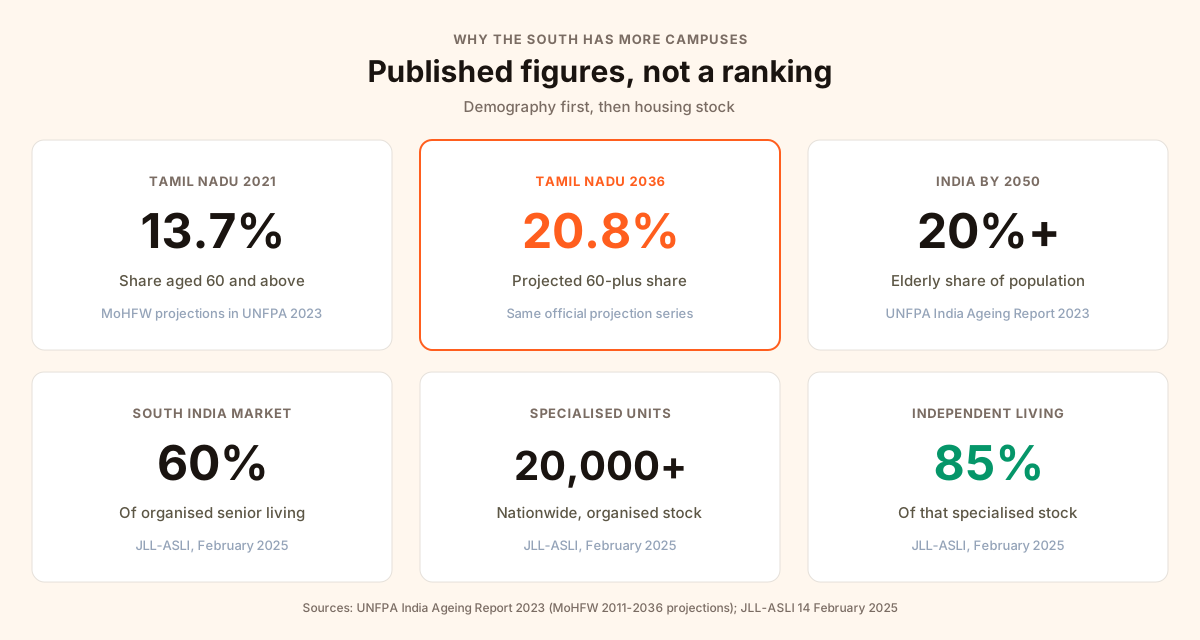
Do not read “22,157 units in India” as 22,157 campuses in Tamil Nadu. It is the national organised stock, still small against the household numbers JLL cites. Directory sites that count hundreds of “retirement homes” in the state are usually mixing old-age homes, paying guest lodges, and assisted-living beds into one list.
How to Tell Which One You Are Looking At
Use this on a phone, in the car, before you go in.
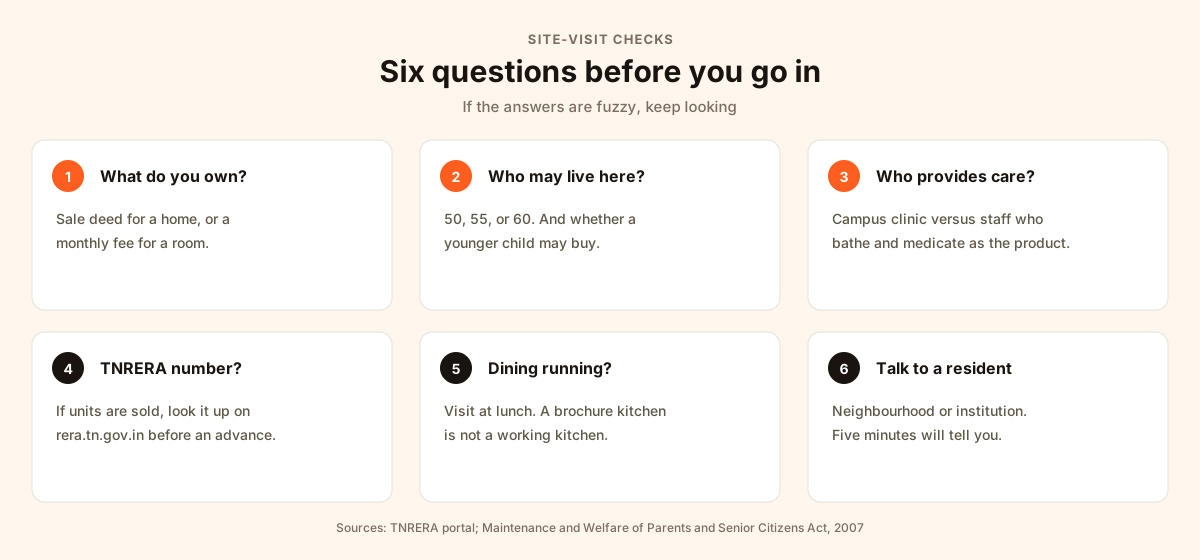
If the answers point to a family house with better access, start with bathrooms, stairs, and night lighting, not with a campus tour. If they point to assisted living, you are shopping for care quality and staffing, not for a floor plan. If they point to independent living, you are a home buyer again: title, RERA, location, hospital access, and who already lives next door.
A Salem Example, Kept in Its Place
Maghilvanam is a Vilva Homes community in Vinayagam Patty, in the Yercaud foothills, for residents aged 55 and above. Independent villas are occupied. Kaveri Block is the first apartment building, 30 homes, all 2 BHK. The clubhouse, spiritual centre, swimming pool, and common vegetarian dining are already in use. Sharon Hospital sits next to the campus. The community is registered with TNRERA.
That is independent living: a home you buy, an age rule, campus services. It is not an old-age home and it is not assisted living.
This post is the map. For the national census, ticket sizes, and named operators, read senior living in India: the numbers. The next one is the visit: what to look for in a senior living community. Then senior living in Salem for the city, Salem vs Chennai vs Coimbatore if the children live in different cities, and can children buy a 55-plus home if a son or daughter will be on the papers. Maghilvanam, the Vilva Homes 55-plus community, is at /projects/maghilvanam/. The joint-family home guide is for the house you already have.
Chola Builders has been building in Salem since 1994. If your family is weighing a 55-plus community, a joint-family house, or an apartment with a reliable lift, call us or send a WhatsApp.
For the house you already have, start with choosing a home for a joint family. For the city around it, why families move to Salem and how Salem is laid out are the two orientation pieces. If the next question is apartment versus villa in ordinary housing, that is this comparison. Maghilvanam, the Vilva Homes 55-plus community, is at /projects/maghilvanam/.