Flat Handover Checklist for Tamil Nadu Buyers
The handover is the most under-prepared moment in a flat purchase. Inspect first, sign last. Here is the walk-through to do before you take the keys.
Last verified against government sources on . We re-check this post whenever rules change.
In this guide, you'll learn
- Walk through the flat for 2 to 4 hours before you sign anything. Mark every defect with masking tape and a dated photo.
- Insist on the Occupancy Certificate (OC) before you sign possession. Living in a flat without an OC is illegal in Tamil Nadu.
- Write a snag list (a room-by-room list of every defect with photos), agree fixes with the builder in writing, then sign. It is far easier to get things sorted before you sign than after.
- A reputable builder stays reachable after handover. If something genuine shows up later, raise it in writing with a photo and the date, and keep a copy for your records.
- Eight documents must come home with you: OC, CC, mother deed (the land's chain of past sale deeds, ideally 30 to 50 years), Fire NOC, sanctioned plan, architect's certificate of areas, encumbrance certificate (a government statement showing no unpaid loans or legal claims on the property), and (later) the society handover pack.
The handover day is the moment most flat buyers in Tamil Nadu are least prepared for. By then they have spent two years thinking about money, paperwork, EMIs and stamp duty. The actual day of taking the keys feels like a formality. It is not. It is the single biggest moment of pressure you have on the builder, and once you sign the possession letter, that pressure is gone.
This guide is the walk-through we wish every buyer did before signing anything. Two to four hours of careful inspection. A written snag list (a room-by-room list of every defect with photos). A sit-down with the builder. Only then the signature. It is also part of our buyer-journey series, alongside understanding the real cost of buying a flat in Tamil Nadu.
Before you go: what to bring
A surprising number of buyers walk into a handover with only a smile and their car keys. Treat this like an inspection, because that is what it is.
Handover day usually has family in the flat, the builder’s site engineer, sometimes a small puja planned, and someone hinting that the inspection is taking too long. That pressure to wrap up quickly is exactly what causes most regret six months later. Two to four hours is normal. Take them.
Bring with you:
- The original registration receipt (or a photocopy) and your government ID.
- Copies of every payment receipt to the builder.
- Your sale agreement, especially the specifications page that lists what fittings the flat is supposed to have.
- A roll of masking tape, a phone with a working camera and plenty of free storage, a notepad and pen.
- A small 3-pin earth tester (₹150 to ₹300 at any hardware shop).
- A witness: your spouse, an adult child, or a friend who has bought a flat before.
The most useful thing to do the night before is to read your sale agreement’s specifications page. That is the contractual list of what the builder promised: 32 mm doors, vitrified tiles in living and bedrooms, anti-skid in bathrooms, modular kitchen of brand X, etc. The walk-through is your one shot to confirm every specification was actually delivered.
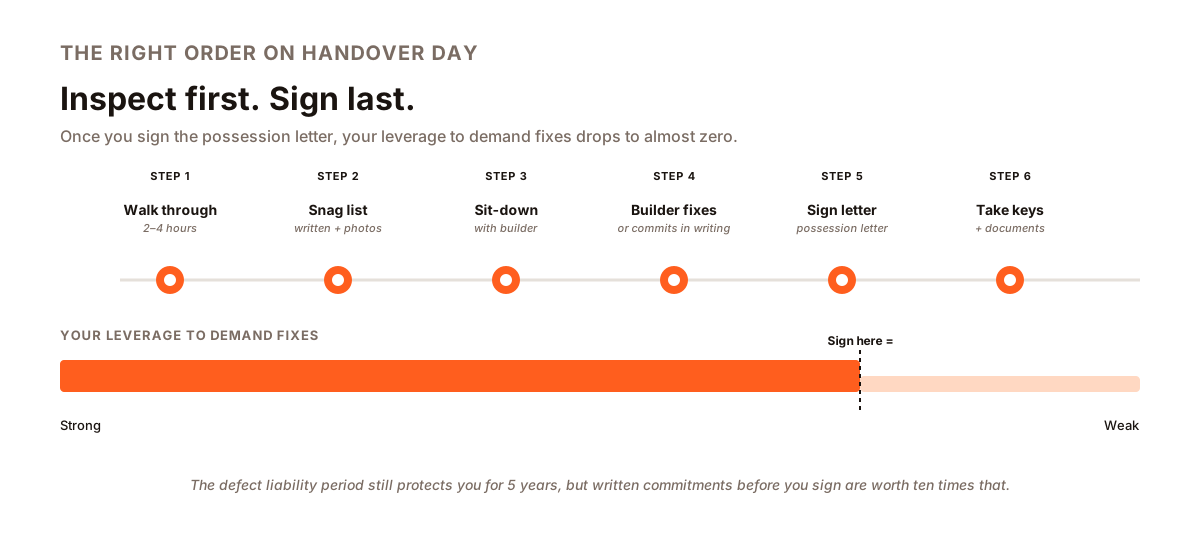
Inspect first, sign last
This is the single most important rule of a handover. Before you sign the possession letter, it is easy to get any defect that matters put right, because the builder is right there and motivated to close out the unit. After you sign, the same fixes simply take longer to arrange. So inspect thoroughly, and sign once you are satisfied the flat is as promised.
The handover day is the best moment to get every detail right, while the builder is on hand and keen to close out the unit.
Before signing, the builder has every incentive to fix things on the spot because they cannot close out the unit on their books. After signing, the same defect becomes a complaint to be triaged. Same defect, completely different urgency.
The walk-through
Six categories. Two to four hours. Move through them in order so you don’t double back.
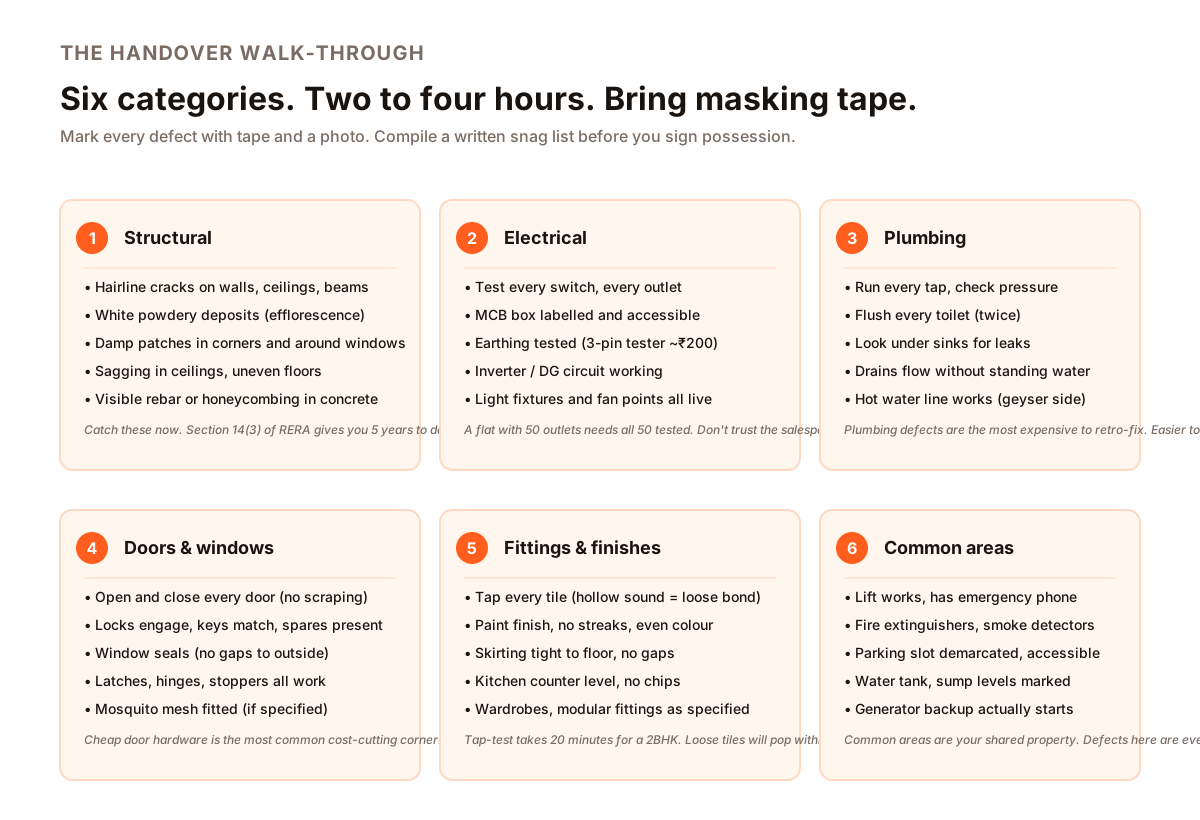
A few of these need a specific technique worth knowing. The tile tap test is the simplest defect detector in your toolkit: tap every tile with a coin. A solid “tock” means good bond. A hollow “ploo” means the tile is not bonded properly to the substrate and will pop within 12 to 18 months. A 2BHK has roughly 300 tiles. Tapping all of them takes 20 minutes. We have caught hundreds of loose tiles this way on our own handovers, and 20 minutes saves a ₹15,000 repair later.
Efflorescence, the white powdery deposit you see on some walls and ceilings, is moisture intrusion forcing salts to the surface. It is not cosmetic. It indicates either waterproofing failure or a leak somewhere upstream. Make the builder fix the source, not just paint over it.
Earthing test: plug a 3-pin tester into every socket. If the earth pin shows no continuity, the flat has electrical safety problems. This is more common than you think; ask any electrician who works on apartments.
Window seals: stand inside, look at the outer edge of every window. If you can see daylight, that gap will let in monsoon water. Get it sealed before you sign.
Common areas matter as much as your unit. The lift, the fire safety equipment, the parking demarcation, the water tank, the generator. These are the things that will affect your life every single day. Insist on a walk-through of the common areas with the builder before you sign for your unit.
Documents you must receive
While the walk-through happens, the builder’s office is preparing your document set. Eight items must come home with you. The Occupancy Certificate is the dealbreaker; if it is not in the pack, do not sign.
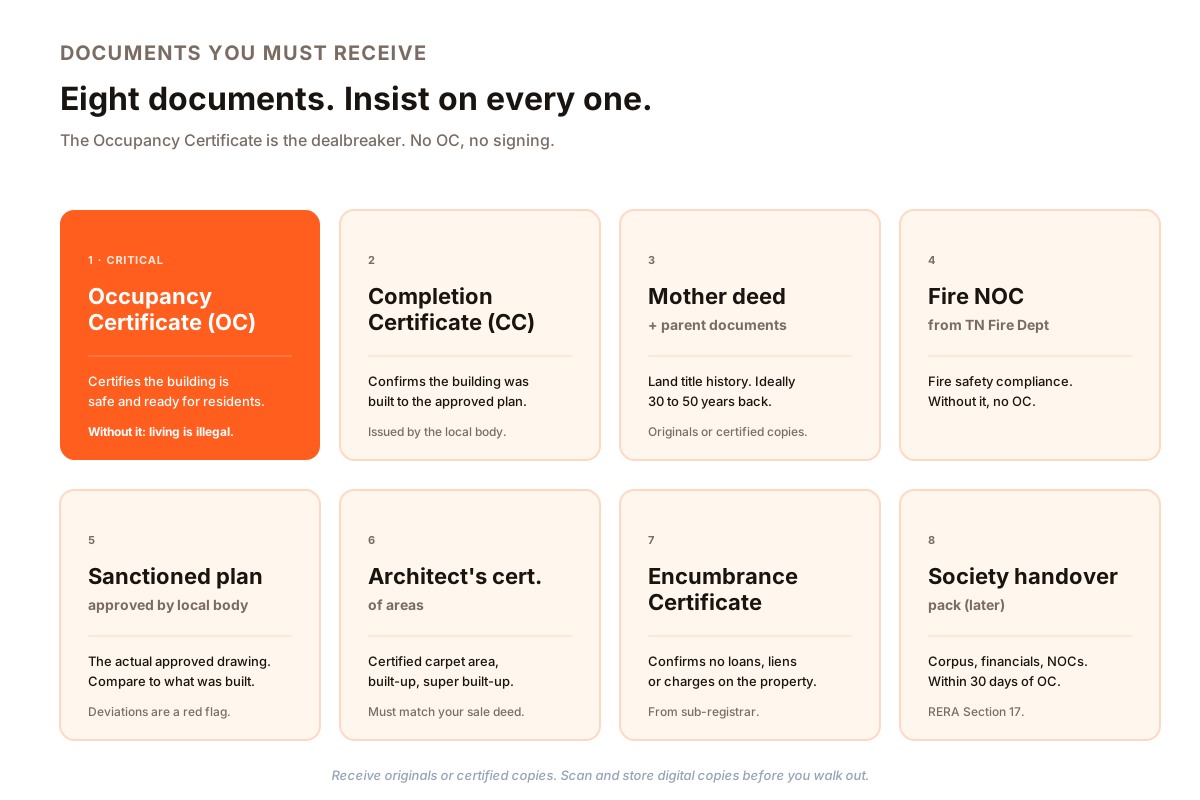
The OC deserves a separate mention because it is the document that determines whether you can legally live in the flat. Without it, three things can go wrong. You cannot apply for permanent water and electricity connections in most Tamil Nadu municipalities. Banks routinely hold back the final instalment of your home loan. And the local body can technically order you to vacate. Builders sometimes offer to hand over possession before OC is issued, with a promise to “regularise it later”. That promise is worthless. If the OC is not issued at handover, postpone the handover.
The encumbrance certificate is worth scanning closely. If it shows any unpaid loan, court case or other legal claim still attached to the flat, the title is not clean. Refuse possession until that is cleared.
The architect’s certificate of areas should match the carpet, built-up and super built-up areas in your sale agreement. Under RERA, the binding figure is carpet area, not super built-up. Under the model Agreement for Sale notified by Tamil Nadu (under Section 13 of the RERA Act), if the actual carpet area is more than 3 percent less than what was agreed, the builder must refund the excess money you paid for that shortfall, with interest, typically within 45 days.
After you move in
Most of what matters at a handover is caught in the walk-through. For the slower things that can surface later, a damp patch that appears in the first monsoon, a genuine workmanship issue, the simplest path is the direct one. Tell the builder in writing, with a dated photo, and a builder who has delivered homes for years will want to put it right. In a town like Salem, a builder’s standing rests on exactly this kind of follow-through.
Keep your handover paperwork and your dated snag-list photos together in one folder. If anything ever needs attention, that record makes the conversation quick and factual.
After handover: society formation
For larger projects, there is one more deadline buyers should know about. Under Section 11(4)(e) of the RERA Act, the builder must facilitate the formation of a residents’ association (society) within 3 months of the majority of allottees having booked their units, in the absence of a different local law.
Under Section 17, the builder must then transfer the common areas (lifts, lobbies, gardens, clubhouse, parking, water tanks, generator) and all related documents (sanctioned plans, NOCs, maintenance records, corpus fund, financials) to the association within 30 days of obtaining the OC, unless local law specifies a different timeline.
In practice, until the residents’ association is registered and ready to take over, the builder typically continues interim maintenance of common areas. This is operational reality, not a statutory entitlement. Buyers should push for the association to be formed and the formal handover completed without delay.
Before you sign
The handover day is the best moment to get every detail right, while the builder is on hand and keen to close out the unit. Use that moment well. Spend the time, do the inspection, write the snag list, get the commitments in writing. Then sign.
It can feel awkward to inspect this carefully with the builder standing next to you. Do it anyway. A good builder respects a thorough buyer and would rather get everything right before you move in.
The easy defects, the ones you can spot in an afternoon’s walk-through, are best caught now while the builder is right there and motivated to fix them on the spot. For anything slower that surfaces later, a quick written note to the builder is usually all it takes.
If you would like to walk through any of this with someone who has handed over more than a thousand homes in Salem since 1994, call us. We are happy to share the snag-list framework we use for our own Chola Builders projects, or to talk through what to look for on any builder’s handover. You can also see our current projects. If you are an NRI handing over by Power of Attorney, our NRI buyer guide covers the additional steps for remote possession.