
NRI vs OCI vs PIO: Who Can Buy Property in India
Three letters, three different meanings. NRI is a tax-and-banking category for Indian citizens abroad. OCI is a lifelong-visa status for foreign citizens of Indian origin. PIO has been defunct since 1 January 2026. Here's what each can do in India.
Last verified against government sources on . We re-check this post whenever rules change.
In this guide, you'll learn
- NRI (Non-Resident Indian) is for Indian citizens living abroad. They keep their Indian passport and most rights, including voting in person at polling booths in India.
- OCI (Overseas Citizen of India) is for foreign citizens of Indian origin. They get a lifelong multi-entry visa and parity with NRIs for property, banking and finance, but cannot vote or hold senior government posts.
- PIO (Person of Indian Origin) was merged into OCI in January 2015. As of 1 January 2026, PIO cards are no longer accepted for travel to India. The 'OCI in Lieu of PIO' fast-track conversion facility also closed; PIO holders now need a fresh OCI application or a regular visa.
- For Indian property purchase, NRI and OCI are functionally identical. Both can buy residential and commercial freely; neither can buy agricultural land, plantations or farmhouses (purchase prohibited; inheritance is allowed; gifts of such property are not).
- The NRI rules under FEMA (which governs property and bank accounts) are different from the NRI rules under the Income Tax Act (which governs tax). You can be one under FEMA and the other under Income Tax in the same year.
NRI, OCI, PIO. Three letters for three things that look interchangeable in casual conversation but mean different things at a sub-registrar’s office, a bank counter, or an immigration desk. For most diaspora property buyers, the distinctions don’t change the rules, but they change the paperwork.
This guide is the plain-language version of who’s who and what each can do in India. It pairs with our NRI buying guide and NRI selling guide, both of which apply equally to OCI cardholders.
The three categories in 60 seconds
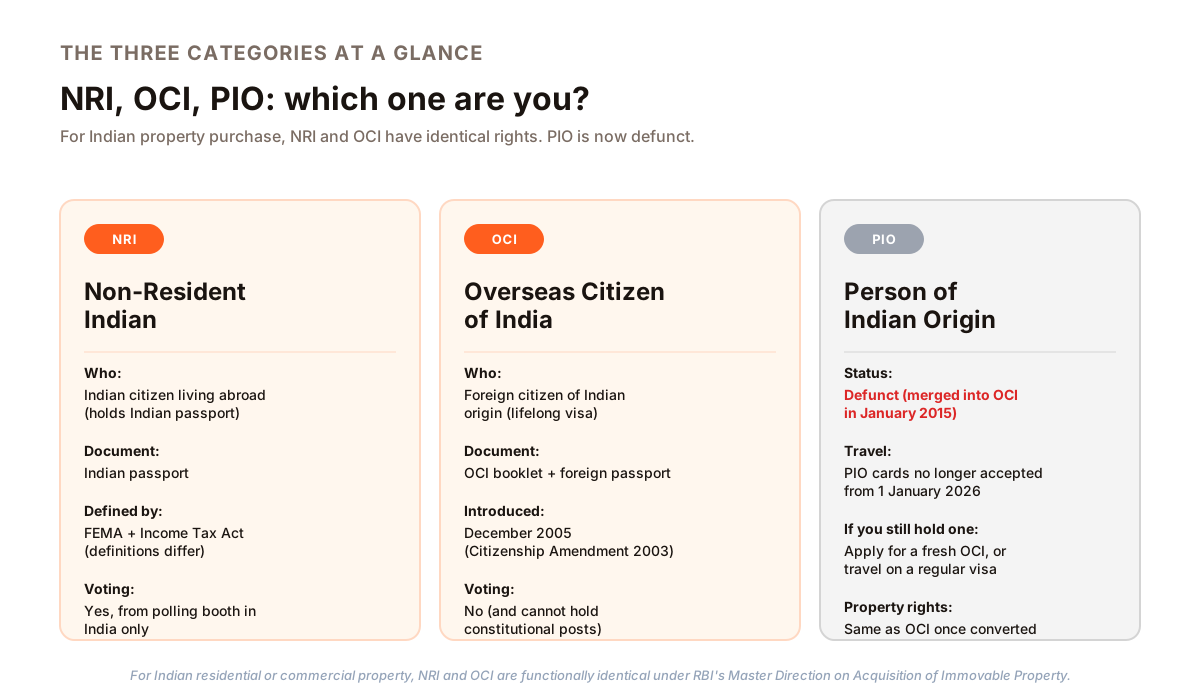
NRI is the simplest. It’s a status for Indian citizens who live abroad. You still hold an Indian passport. The status is defined by two different Indian laws (FEMA and the Income Tax Act) that don’t fully agree with each other. You can vote in Indian elections, but only by physically being at a polling booth in India. You can hold any Indian government position you’re otherwise qualified for.
OCI is the more recent category, introduced in December 2005. It’s for foreign citizens (US, UK, Singapore, Canada, Australia, UAE, etc.) who have Indian ancestry. The OCI booklet looks like a passport but isn’t one; it works alongside your foreign passport as a lifelong multi-entry visa to India. OCIs cannot vote in Indian elections and cannot hold the senior posts reserved for Indian citizens in the Constitution. For property and banking, an OCI is treated identically to an NRI.
PIO is the historical category that has now been fully folded into OCI. The PIO card scheme launched in 2002 for foreign citizens of Indian origin. In January 2015, the government merged PIO into OCI and stopped issuing new PIO cards. Existing PIO cards remained valid for travel until 31 December 2025. As of 1 January 2026, PIO cards are no longer accepted at Indian immigration. The streamlined “OCI in Lieu of PIO” conversion facility (which let PIO holders skip re-establishing their Indian-origin chain) also closed at the end of 2025. PIO holders now apply for a fresh OCI with full documentation, or travel on a regular visa.
The rights matrix
For property buyers, the practical question is: which of these statuses lets me do what?
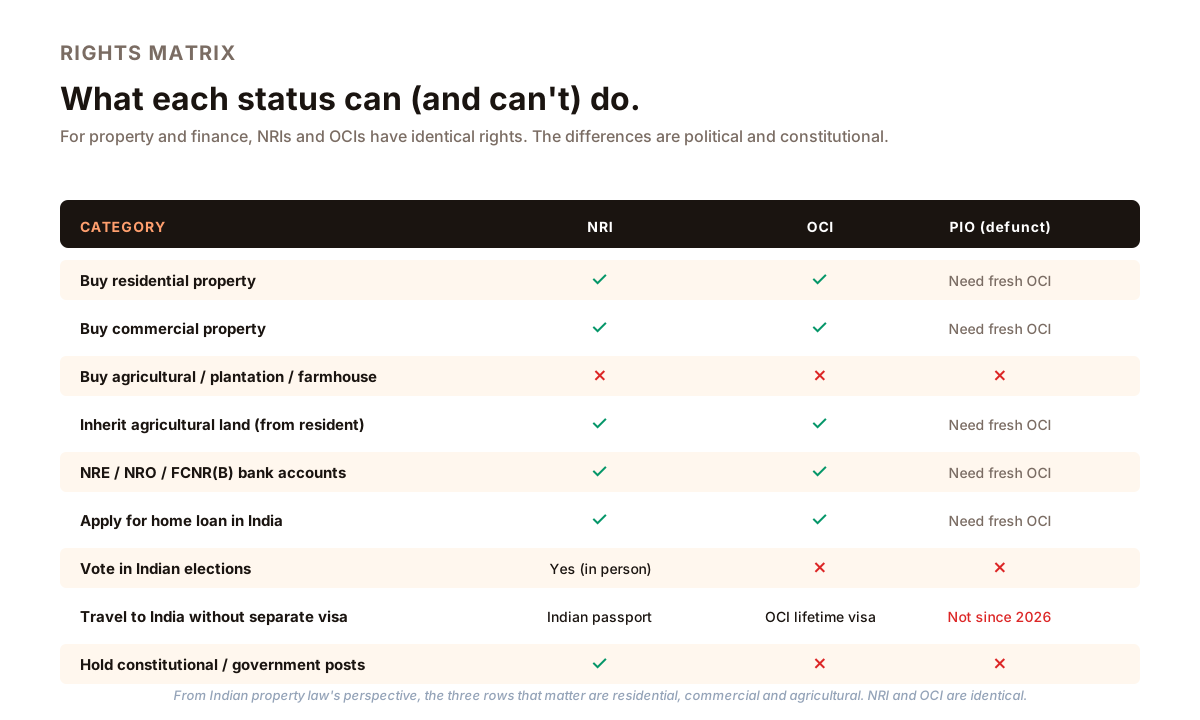
The three property-relevant lines (residential, commercial, agricultural) are the same for NRI and OCI. Both can freely buy residential and commercial property in any number, with no RBI approval.
Neither can buy agricultural land, plantation property or farmhouses through purchase, regardless of how much money they have or how good the reason is. The agricultural ban applies even if you intend to convert the land to residential use later. The RBI has discretionary power to grant exceptions but rarely does so.
What both NRIs and OCIs can do with agricultural land is inherit it from a resident relative. They cannot receive it as a gift; the FEMA gift exception applies to residential and commercial property only. Once inherited, the acquired land belongs to them, but they can only sell it to a resident Indian (not to another NRI or OCI).
Bank accounts (NRE for foreign earnings you want to keep convertible, NRO for Indian rupee income like rent, FCNR(B) for foreign-currency fixed deposits) work the same for both. Home loans work the same. Stamp duty and registration are the same. TDS at sale (the tax that the buyer deducts and deposits with the government before paying you, governed by Section 195 of the Income Tax Act) is the same.
From every angle that matters for buying or holding a flat in Tamil Nadu, an OCI cardholder and an NRI are interchangeable.
The differences are political. NRIs remain Indian citizens. They can vote in Indian elections (only from physical polling booths in India during visits, not remotely). They can hold any Indian government position they’re qualified for. OCIs cannot. OCI is a lifetime visa with parity-with-NRI for finance, not a path to citizenship.
The two NRI definitions you need to know
Here’s where it gets confusing for first-time NRIs. There’s not one definition of “NRI” in Indian law. There are two, and they don’t agree.
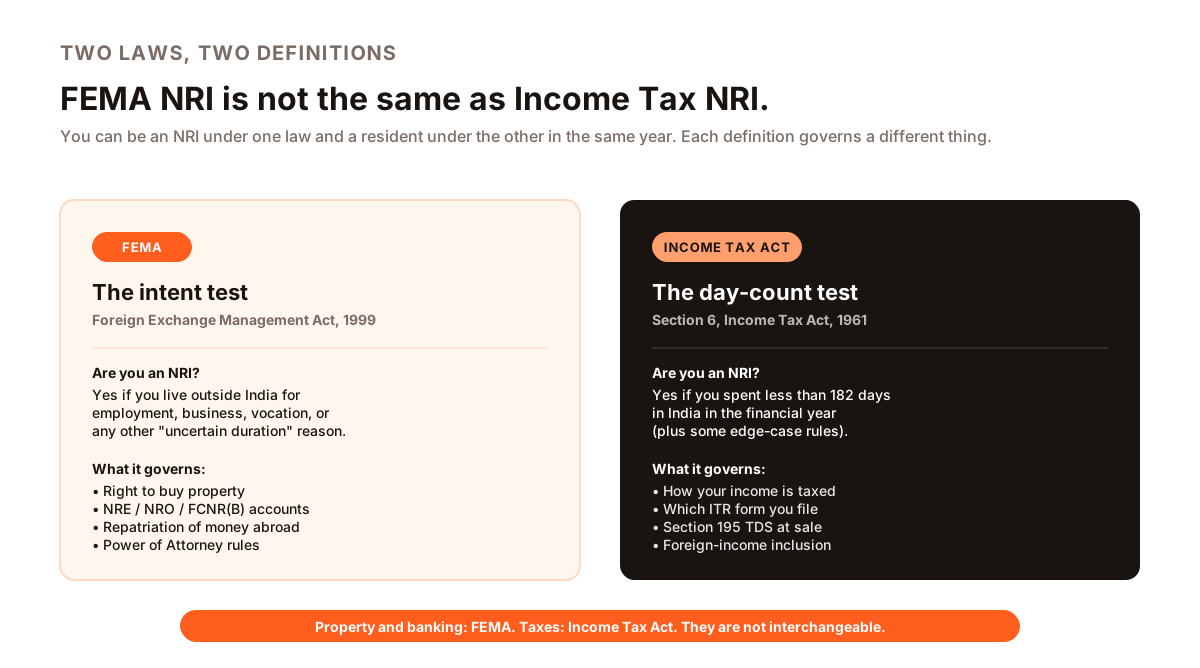
Under FEMA (the Foreign Exchange Management Act, 1999), an NRI is anyone who has left India, or stays outside India, for work, business, vocation, or any other reason suggesting an indefinite stay abroad. The test is about intent and pattern, not strict day counts. A Tamil software engineer in Singapore on a long-term work permit is clearly NRI under FEMA. A retiree who relocated to Dubai is also clearly NRI under FEMA.
Under the Income Tax Act, 1961, an NRI is defined by physical presence. You’re an NRI for income tax purposes if you spent less than 182 days in India during the relevant financial year (April to March), with some edge-case rules involving the prior four years. Intent doesn’t matter.
Take a Singapore-based NRI under FEMA. They spend 200 days in India one year, looking after ageing parents. For that year, they are a tax resident under the Income Tax Act, even though they remain an NRI under FEMA.
Finance Act 2020 added a third wrinkle for high-income Indian citizens. If your total income (other than foreign-source income) exceeds ₹15 lakh and you’re not paying tax in any other country, India treats you as a tax resident anyway, a category called “deemed resident”, even if you spent fewer days in India. The presence threshold also drops from 182 to 120 days for these high-income Indian citizens. This rule was written for Indian citizens in zero-tax countries like the UAE who would otherwise pay tax nowhere.
If you’re a Dubai-based professional sending money home and assuming your Indian tax life is simple, the deemed-resident rule is the surprise to watch for. Run the numbers with a CA who works with the Gulf diaspora before you assume.
The practical consequence: figure out which law your question falls under before asking. Buying property in Salem? FEMA. Filing taxes? Income Tax Act. Opening a bank account? FEMA. Calculating TDS on the sale of your flat? Income Tax Act. The bank or sub-registrar will use the FEMA test; your CA will use the Income Tax test.
A 24-year story: how the diaspora categories evolved
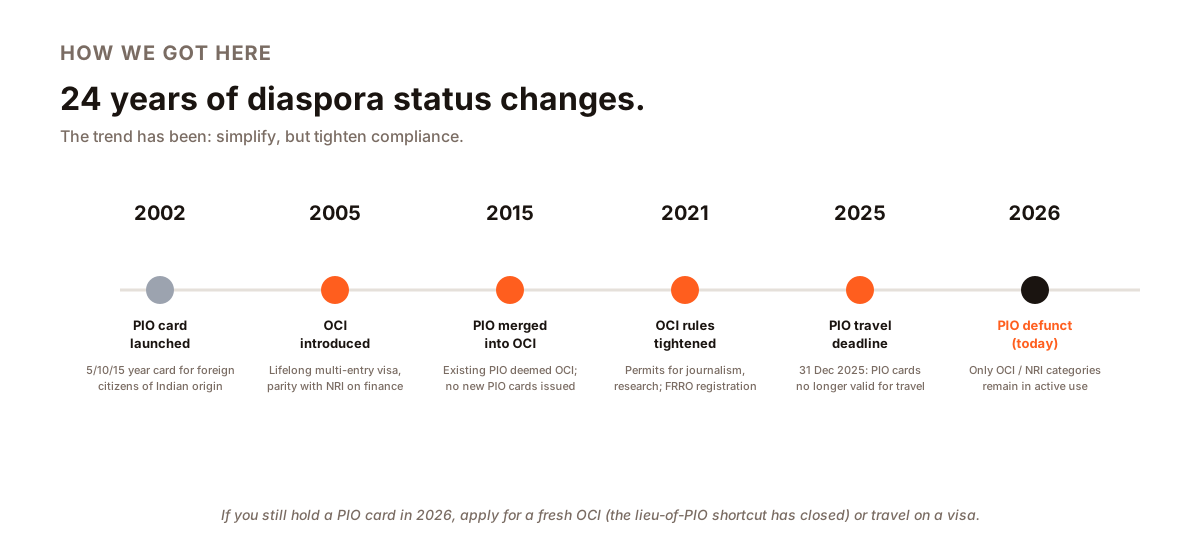
The trend across these 24 years has been: simplify the categories, but tighten compliance. Three diaspora categories (NRI, OCI, PIO) became two (NRI, OCI) in 2015. The 2021 OCI rule changes added permit and registration requirements that didn’t exist before. The 2025 deadline finally closed out the PIO chapter, along with the fast-track conversion facility. As of 2026, all Indian-origin overseas residents fall cleanly into either NRI (Indian citizen abroad) or OCI (foreign citizen with Indian roots).
If you held a PIO card and never converted before 31 December 2025, the streamlined “OCI in Lieu of PIO” route is no longer available. You now apply for a fresh OCI card with full Indian-origin documentation: your own, parents’, grandparents’ or great-grandparents’ Indian birth certificates, old Indian passports, citizenship records, or domicile certificates. This is more paperwork than the lieu-of-PIO process would have been, but it’s the same documentation that someone applying for OCI for the first time would submit. Most Indian missions abroad process fresh OCI applications in 4 to 12 weeks (the OCI fee was also raised to USD 275 from April 2026).
If a parent’s health is the reason for your next India trip and you don’t have time to wait for OCI, apply for a regular tourist or business visa as a stopgap. The mission consular line is the first call, not the airline.
What this means for property buying in Tamil Nadu
For a flat purchase, the practical implications are short.
If you’re an NRI or an OCI, our NRI buying guide applies to you exactly. Same FEMA rules. Same bank accounts. Same Power of Attorney process if you can’t fly in. Same stamp duty and registration. Same documents at handover.
If you’re still on a PIO card in 2026, the sub-registrar will not register a sale deed in your name. The sale agreement can be signed, but you need a valid OCI booklet (or Indian passport) for the actual registration. Start the OCI application before signing anything binding.
If you took foreign citizenship in the last few months and your OCI booklet hasn’t arrived yet, you’re in a strange in-between. Legally, you’re a foreign tourist who needs a visa to enter India, even if you grew up there. Plan the gap. Don’t book a flight expecting to walk through immigration on the strength of memory and accent.
Before you commit
For most overseas Indian buyers, the NRI vs OCI distinction is academic. Same property rights, same paperwork, same money flows. The PIO chapter is closed; if you’re still on a PIO card, the only action is to apply for a fresh OCI.
If you would like to talk through any of this for a Tamil Nadu property, call us. We work with NRI and OCI buyers from Singapore, Dubai, Kuala Lumpur, the US and the UK regularly, and can point you to the chartered accountants and Indian missions that handle status applications well. You can also start at the beginning with our NRI buying guide, our NRI selling guide, or see our current projects.